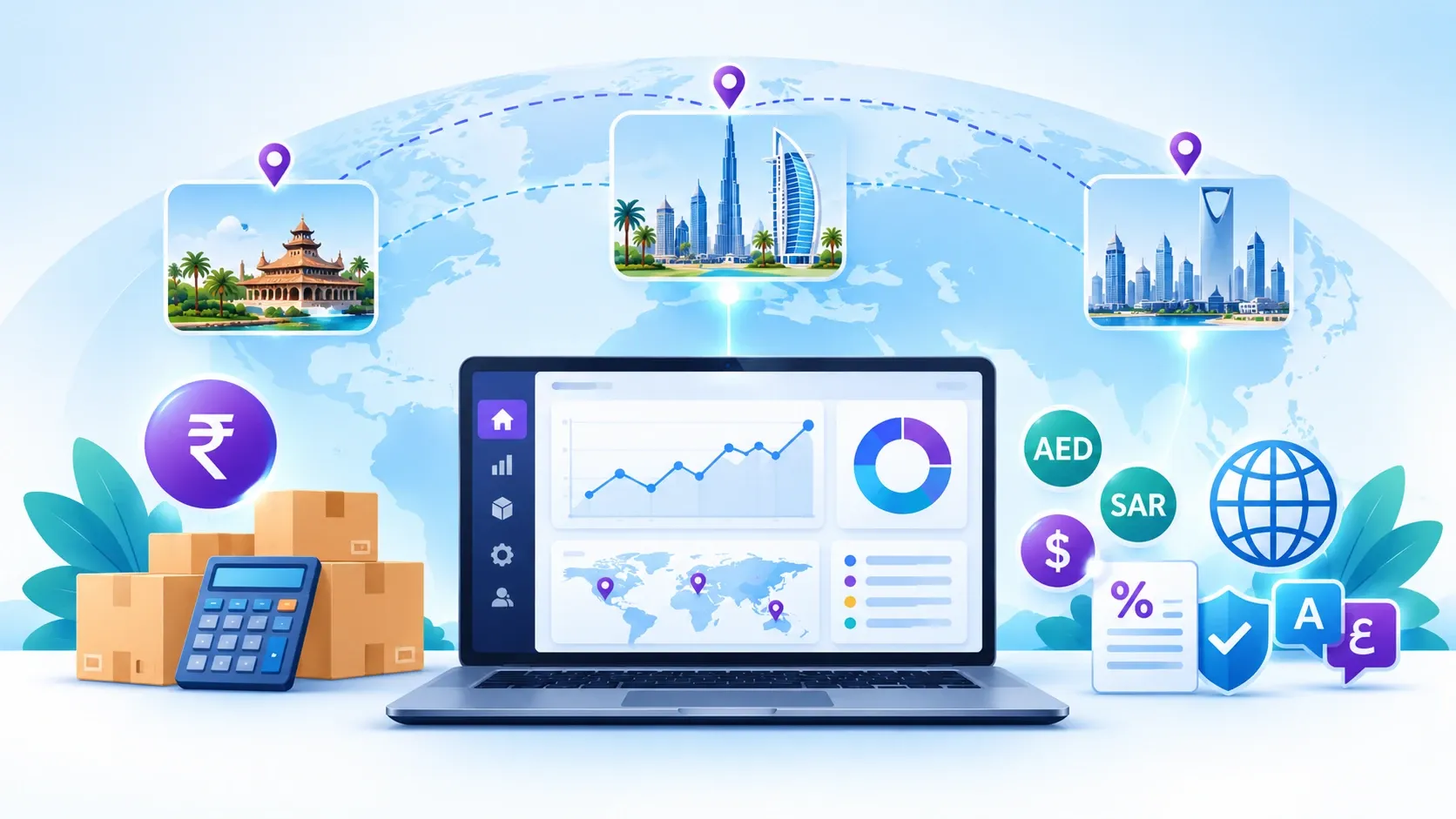
Odoo ERP for Global Teams: Managing Multiple Countries and Languages
Odoo ERP for Global Teams: Managing Multiple Countries and Languages
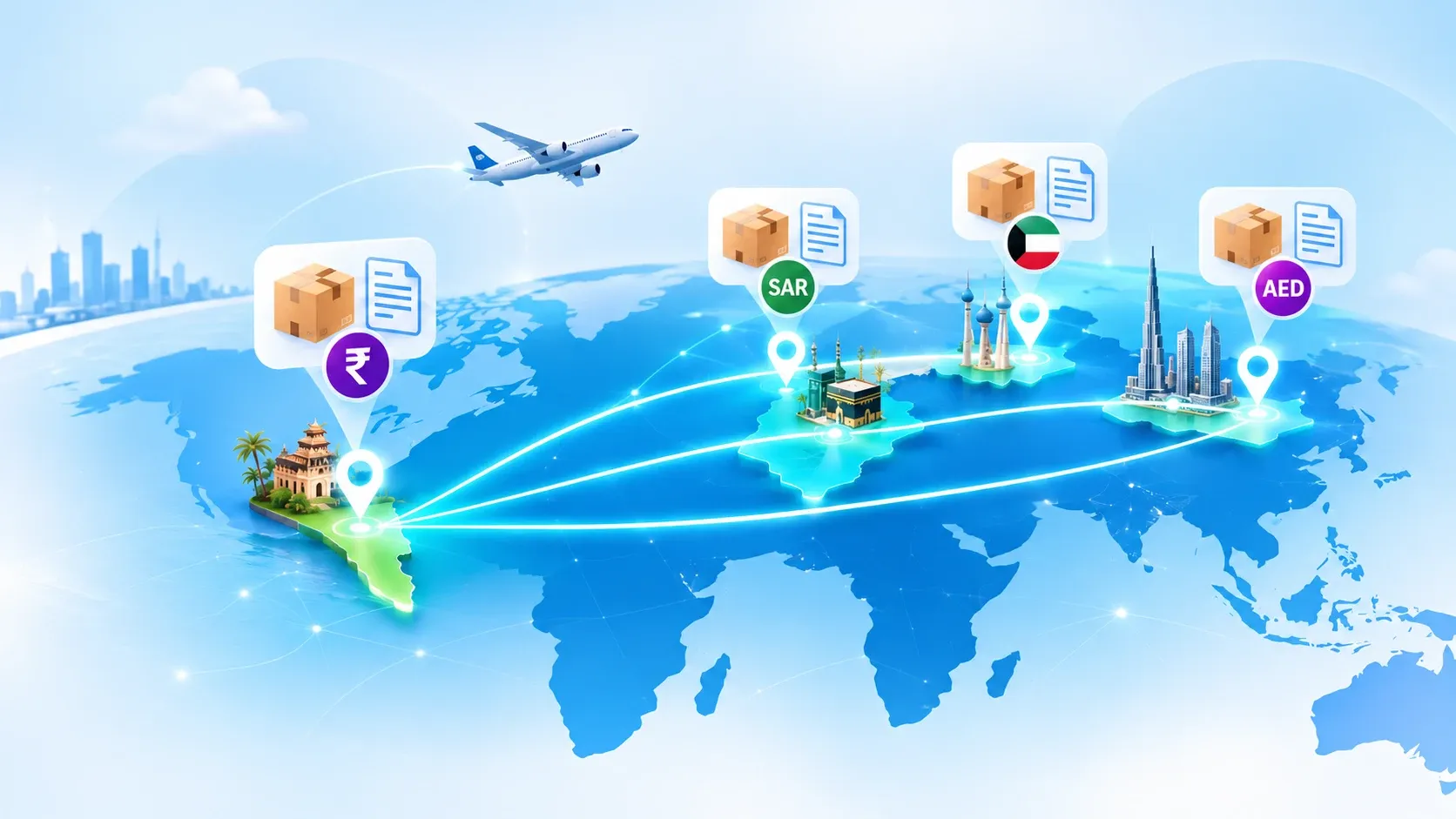
Selling in a second country sounds like a win, until records, stock and invoices start living in different places. For businesses operating across India and the Gulf, Odoo ERP offers a way to bring multiple countries, currencies, taxes and languages into one system, so growth doesn't turn into extra work.
It often starts small. A business in Kerala receives its first enquiries from Kuwait, Dubai or Saudi Arabia, and soon each market brings its own rules, its own currency and its own language. This guide explains how one Odoo ERP Kerala system can handle all of that, from multiple companies and local taxes to Arabic and English on the same record, and how to roll it out one country at a time.
Why does expanding across international borders disrupt the normal way of business?
A small business may run with one set of systems for accounting in one location, spreadsheets in another, and a handful of WhatsApp messages in between. That structure may work, but once you expand into two or more countries, you may run into a lot of headaches. The customer is entered twice. There is stock in one warehouse and a different stock in another, and the total of stock is not known. The finance department spends the first week of each month reviewing and reading the merged reports instead of interpreting them. There is a lot of disarray in the systems, and the structure of the business does not fit.
How does Odoo ERP handle several countries in one system?
Odoo ERP Kerala addresses all the pain points that a multi-company, multi-country business may face. You can use multiple legal entities within a single database. Each legal entity can set up its own accounting, currency, and taxes.
To simplify, let's say that there is a central office. Within the central office, there are multiple legal entities. Let's also say there are multiple branch offices. With Odoo ERP Kerala, a person or entity from a particular office can view all of its legal entity documents. A user in a particular branch office cannot view documents from another legal entity or branch office. The central office has the highest privilege. They can view everything from all entities.
One of the best benefits is internal trade. Let's say your UAE company decides to sell to your India company. You create one invoice in your UAE company and the other in India. You are done for the day and the reconciliation at month end is largely done for you.
Currencies and taxes, especially the local laws
Every company in Odoo can have their own legal currency. The company in Dubai will record the invoice to the customer in Saudi in riyals, and will be for their company records in riyals. Odoo will handle the variance in exchange rate and make the appropriate record, instead of the user fixing the discrepancy manually.
Taxes are where global projects become real. India has GST, Saudi Arabia has VAT with its own e-invoicing system, and each country keeps updating its requirements, so these should always be confirmed against current rules before go-live. Odoo supports country-specific accounting setups, and fiscal positions let the same product carry the correct tax in each market.
Saudi Arabia is a good example of why this planning matters. For MK General Contracting, we built a customised Odoo ERP with ZATCA-compliant invoicing, which also improved how the company tracks its projects. For a contracting business, invoicing rules and project costs are tightly linked, so getting both into one system made day-to-day work simpler.
Can Odoo ERP be used in other languages?
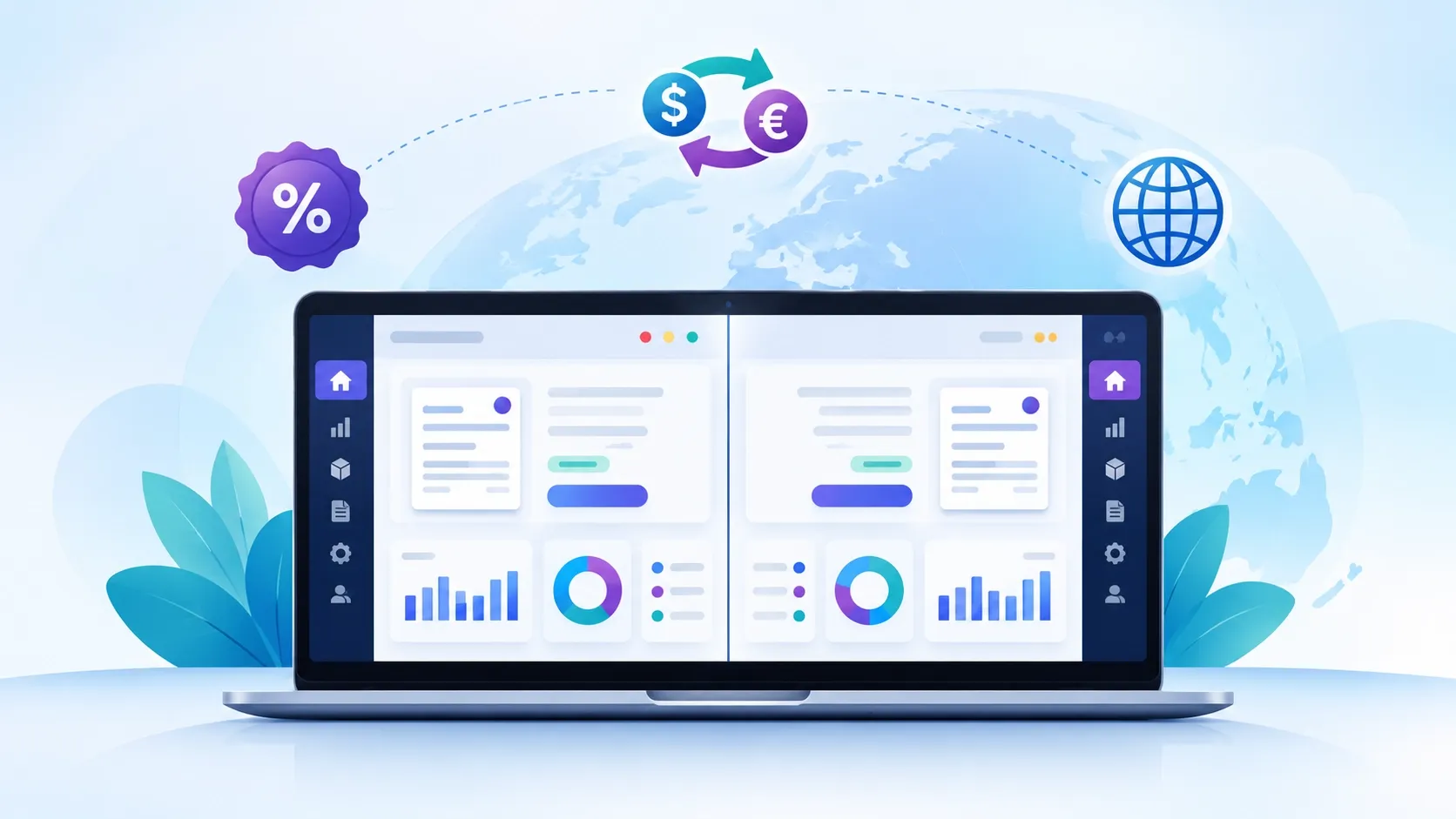
It most definitely can, and it's a great feature to have, especially since users need to be at ease with a system to effectively use it.
There is no need for Odoo users to learn English in order to work with the software. This is because users have the flexibility to choose the language of the software for themselves. This means that both the warehouse and finance teams of an organization can work on the same record while simultaneously using the software in Arabic and English, respectively. Similarly, customers can also view documents and quotes in their native languages, including in Arabic for customers in Kuwait. Even the descriptions and names of the products do not need to be duplicated to support translations in other languages.
Odoo offers great functionality with translation, but keep in mind that custom modules and custom reports will not automatically be translated. This is where it's helpful to be aware that the software needs custom functionality to ensure it remains easy to use. The cost of integrating the ability for custom functionality to support translations will save a great deal of money and time in the long run.
Odoo ERP Kerala vs separate local tools
| Separate tool in each country | One Odoo ERP system | |
|---|---|---|
| Combined view of the business | Manual merging | Built in |
| Customers working with several branches | Duplicated records | One shared record |
| Currencies and local taxes | Handled by hand | Set up per company |
| Opening a new country | New tool, new training | Add a company and configure |
| Best for | One small office | Businesses that keep expanding |
If you run a single small office and only need billing, a lighter tool can be enough. The case for one connected system gets stronger with every country you add.
What do real projects teach us?
Every client is unique, which means every one of our deployments is unique.
A trading business like Oskar, based in Kuwait, requires an ERP system that joins their buying, stock, and sales functions to ensure every department is always on the same page. Similarly, Liwa Spring and Jazeera Al Huda each needed their own bespoke Odoo ERP system to automate their workflows and data management, and increase their overall efficiency.
The value of an Odoo ERP system is how well it reflects the client's unique business processes, rather than the template. Two clients within the same sector can require very different systems.
How should a multi-country rollout begin?
- Choose one company, not all. Select the one that best reflects your business. An easy pilot obscures challenges that will become apparent in a representative pilot.
- Prepare your data. Prepare your customer, supplier and product data. Messy records will not make your new system cleaner, and only create a new mess.
- Train in the working language. Teach each team in their respective working language.
- Stabilise before expanding. Wait for one country to be fully stable and only then move to the next.
What we most often see happen is clients attempting to roll all their countries out at once. While it seems as though it saves time, it actually increases the probability that more things can go wrong all at the same time.
The bottom line
Expanding into new countries brings a new level of complexity. There is a lot to think about and to figure out. But it shouldn't add more complexity or confusion. The Odoo ERP system helps you think of all of these things and gives you a single place to view your entire company, even as it starts to operate across multiple countries. While allowing every country to have its own unique currency, tax rules, and languages.
If you are expanding across the Gulf and need an Odoo Customization services UAE partner who understands local tax, language and invoicing requirements, contact us and share your business setup before you issue your first invoice.
Frequently Asked Questions
1. Is Odoo ERP Kerala capable of multiple countries within a single database?
Yes. Each of the legal entities can keep their own currency, taxes and account balances in one place, while management can see all companies together.
2. Does Odoo ERP Kerala have both Arabic and English capability?
Yes. Each user of Odoo can set the language of their interface. All documents meant for customers are in the customer's chosen language.
3. Is Odoo ERP ZATCA e-invoicing ready?
Yes. We can help you set up Odoo to be fully ZATCA ready. Each of our customers has unique requirements that we have to work through. We suggest that you check in with your requirements for the country you plan to use Odoo in, before go-live.
4. Are Odoo ERP solutions a fit for a company of two countries?
Yes. When you get to the two-country stage, manual reconciliation and consolidation will start to get painful, and that's usually the time for a shift to an all-encompassing system.
5. How do I choose an Odoo customization services in UAE?
Look for a partner with proven multi-company experience, knowledge of UAE VAT and ZATCA e-invoicing, and Arabic and English support. They should also recommend a phased rollout, starting with one country, and offer support after go-live.