Why your ERP system matters
more than you think
- 01 —ERP systems track and record business resources
- 02 —ERP systems provide updated view of core business processes
- 03 —ERP facilitates information flow without interruption
ERP systems bring all core business functions into one unified platform. They are commonly used to manage finance, track inventory, streamline supply chains, handle human resources, and improve customer relationship management.
By connecting departments, they ensure smooth data flow and eliminate isolated systems.
Comprehensive Business Solutions
From enterprise resource planning to customer relationship management, we deliver end-to-end business applications that transform operations.
ERP Systems
Comprehensive enterprise resource planning solutions that integrate all business processes — from finance and procurement to operations and reporting — into a single unified platform.
CRM Solutions
Customer relationship management systems to enhance customer interactions, manage your pipeline, and drive consistent sales growth across your entire team.
Inventory Management
Smart inventory control systems for efficient stock management, real-time tracking, demand forecasting, and warehouse operations across single or multiple locations.
HR Management
Human resource management systems covering the full employee lifecycle — from recruitment and onboarding to payroll, performance management, and offboarding.
Business Intelligence
Advanced analytics and reporting tools for data-driven business decisions. Turn raw operational data into clear dashboards, forecasts, and actionable insights.
Process Automation
Workflow automation solutions to streamline repetitive business processes, reduce manual errors, and free your team to focus on work that actually moves the needle.
Enterprise Technology Stack
We leverage industry-leading technologies to build robust, scalable, and secure business applications.
.NET
Backend
Python
Backend
React
Frontend
Angular
Frontend
Vue.js
Frontend
PostgreSQL
Database
MongoDB
Database
Docker
DevOps
It begins with Your Operations.
Deep discovery. Structured systems. Controlled execution. No bloated modules. Every function serves operational clarity and scale.
01
Map Your Operations
We break down how your business actually runs: departments, workflows, dependencies, and inefficiencies. This creates a clear operational baseline before any system design begins.
02
Architect the System
We design a structured ERP framework that connects all functions: finance, inventory, HR, and operations into one coherent system with defined data flow.
03
Build and Integrate
Modules are implemented in phases and integrated into your existing environment. Each connection is validated to ensure accuracy and stability across departments.
04
Deploy and Align
Your ERP system goes live with structured onboarding. Teams are trained, workflows are aligned, and documentation ensures long-term usability.
05
Support and Scale
Updates
Monitoring
Support
New Modules
Integrations
Scaling
Security
Optimisation
Our featured ERP Solutions works
Discover how we've helped our clients achieve their goals through specialized ERP Solutions solutions and innovative digital strategies.
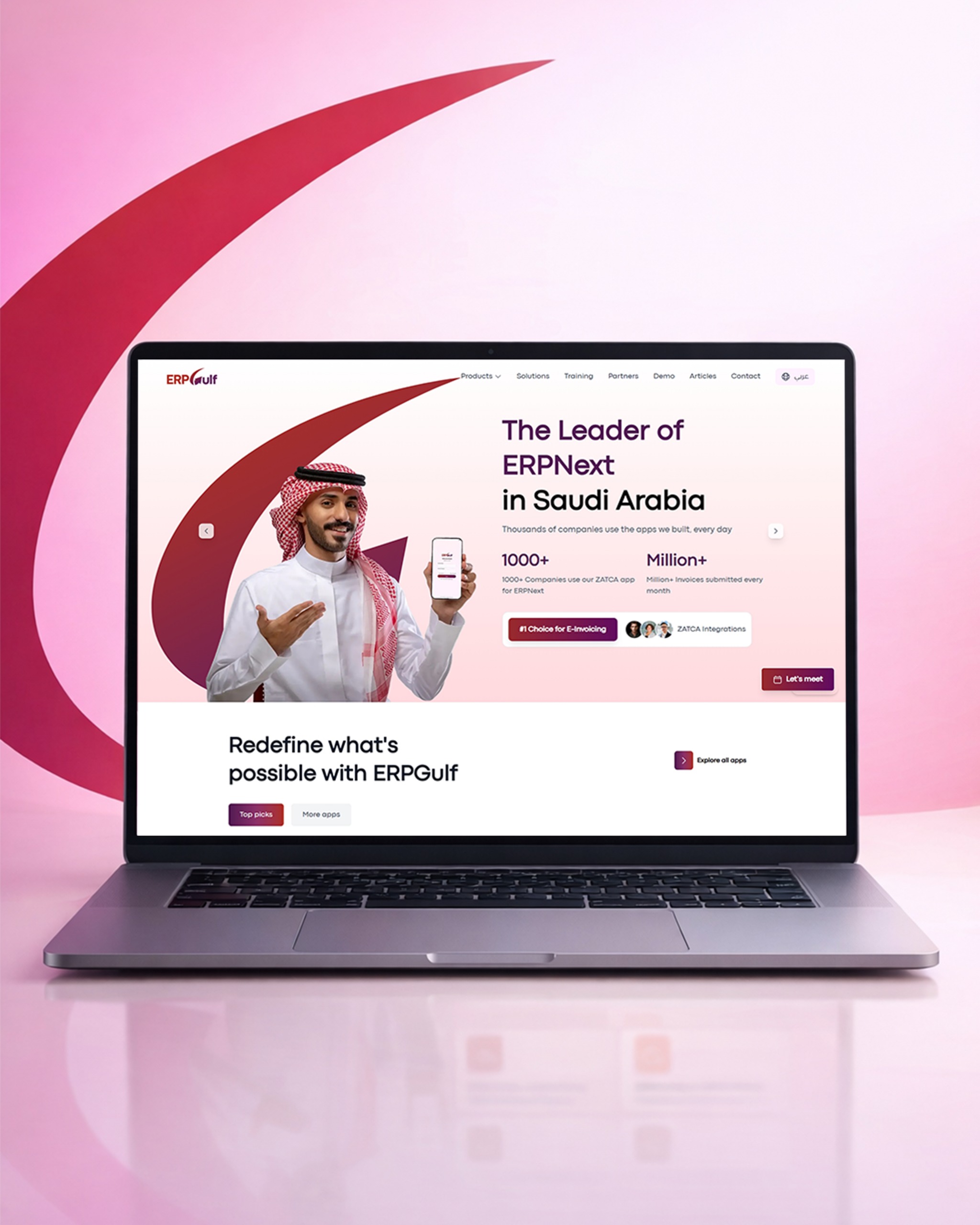
ERPGulf Platform
Full ERPNext deployment for a multi-entity Gulf conglomerate — accounting, inventory, HR, and CRM unified in one system.
Frequently Asked Questions
Have questions? We have answers. Here are the most common things clients ask us before getting started.
We cover the full spectrum — ERP systems, CRM platforms, inventory management, HR systems, business intelligence dashboards, and workflow automation. We work with established platforms like Odoo where they're the right fit, and build fully custom applications when your requirements go beyond what off-the-shelf tools can handle.
We start with your processes, not a preferred tool. If a platform like Odoo or a CRM covers 80–90% of your needs with sensible configuration, we'll recommend it — it's faster and cheaper to maintain. If your workflows are genuinely complex or differentiated enough that a platform becomes a constraint, we build custom. We'll give you a straight answer after a discovery session.
Yes. Integration is a core part of every engagement. We connect business applications to accounting tools, e-commerce platforms, payment gateways, logistics providers, legacy databases, and third-party APIs. The goal is always a single source of truth across your business — not more siloed systems running in parallel.
We treat data migration as a dedicated workstream, not an afterthought. We audit your existing data, map it to the new system's structure, clean and validate it, run dry-run migrations, and only go live once accuracy is confirmed. You won't lose historical records or have to start from scratch.
A focused implementation — say, a CRM rollout or a single ERP module — typically takes 6–10 weeks. A full multi-system implementation covering ERP, CRM, HR, and integrations can run 4–8 months depending on complexity, data migration scope, and how quickly your team can commit to testing and sign-off milestones.
We offer retainer-based support covering bug fixes, user queries, performance monitoring, security updates, and incremental feature additions as your business evolves. We also conduct periodic system health checks. You'll be working with the same team that built the system — not a generic support desk reading from a script.